

The Protege Effect: Why Teaching Helps You Learn More
The Protégé Effect in Enterprise Learning: Teach to Learn
Have you ever had to explain something you only half-understood? Maybe you had to show a new coworker how to do a task. Halfway through, you realised you did not know it as well as you thought.
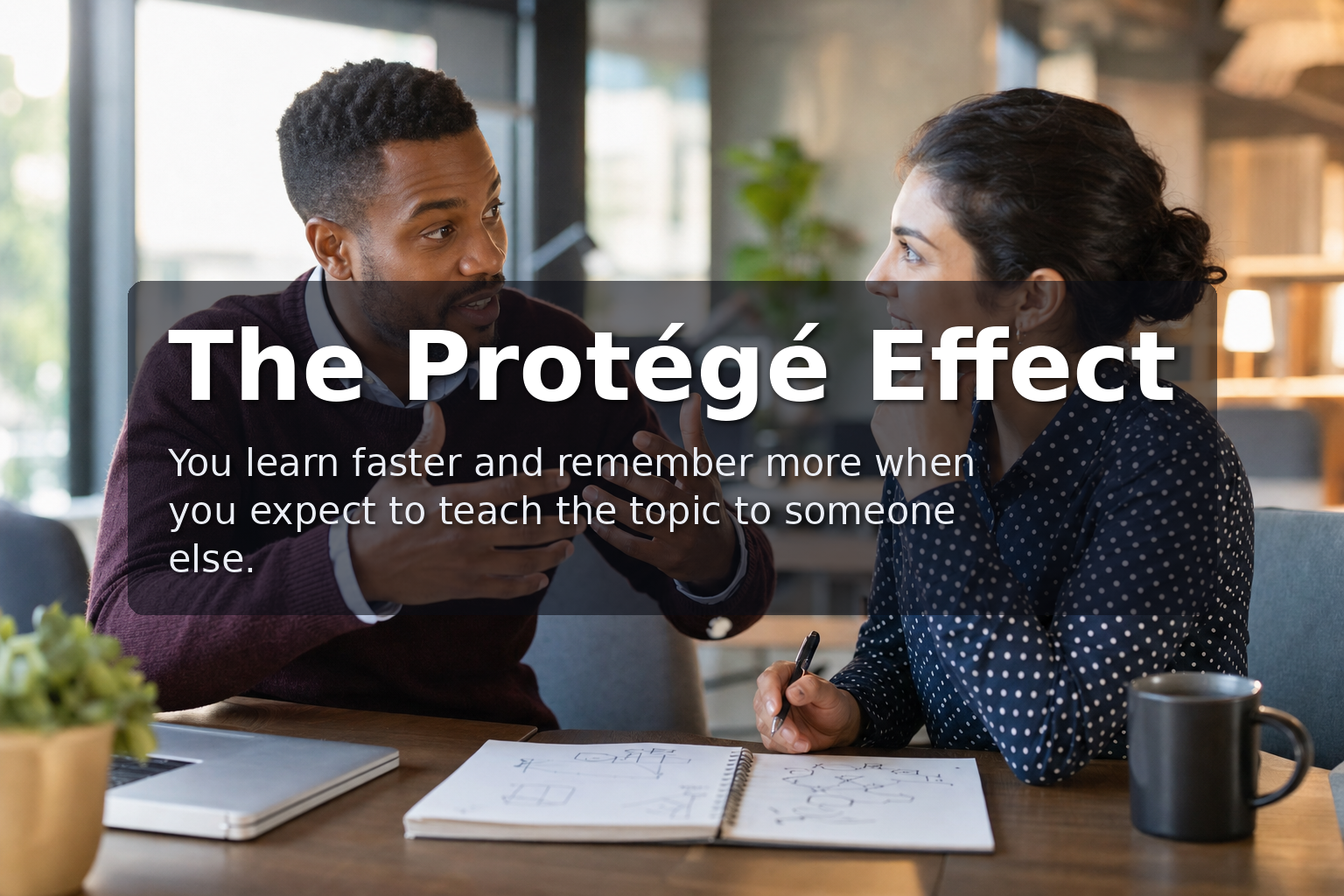
That moment is powerful. When people know they must teach something, they learn it better. This is called the Protégé Effect. It means: you learn faster and remember more when you expect to teach the topic to someone else.
The idea is simple, but it changes how we think about training at work.
What the Protégé Effect looks like at work
In companies, this effect shows up in three common places.
Train-the-trainer programs. You teach a group of people first. Then those people go teach their own teams. While they prepare to teach, they learn the material deeply. They do not just "sit and watch." They build ownership.
Peer instruction. Coworkers teach coworkers. One person learns a topic well, then explains it to a partner. Both people win. The teacher gets a deeper grasp. The learner gets a fresh, plain-language explanation.
Communities of practice. These are groups that meet regularly to share what they know. Members take turns presenting or teaching the group. Every time someone teaches, their own understanding grows.
In all three cases, the magic is the same. The teacher becomes a better learner.
Why it works
The Protégé Effect is not a trick. It works because teaching forces your brain to do hard, useful things.
You pay closer attention. When you know you must teach, you listen and read with a purpose. You notice details you would normally skip.
You organise your thoughts. You cannot explain a messy topic. So you sort ideas into steps, examples, and reasons. This makes the knowledge stick.
You practice pulling facts from memory. Teaching is like a quiz you give yourself. You recall information out loud. Each recall makes the memory stronger. (This is called retrieval practice.)
You find your own gaps. As you teach, you hit spots you cannot explain. These gaps get exposed. Then you go back, fill them in, and repair your understanding.
The best part? The gaps are not failures. They are signals. They show you exactly what to fix.
Using role-plays to boost the Protégé Effect
So how can a company use this on purpose? One of the best tools is the role-play.
A role-play is a practice conversation. One person plays the teacher or expert. Another plays a learner, a customer, or a coworker with questions. They act out a real situation in a safe way.
Role-plays are perfect for the Protégé Effect because they build teaching moments into a safe space.
Imagine a sales team. A new salesperson learns a product. Instead of just reading a guide, they must role-play teaching the product to a "customer" (played by a teammate). To pull that off, they have to understand the product, organise the key points, and handle tricky questions on the spot.
This works for many roles.
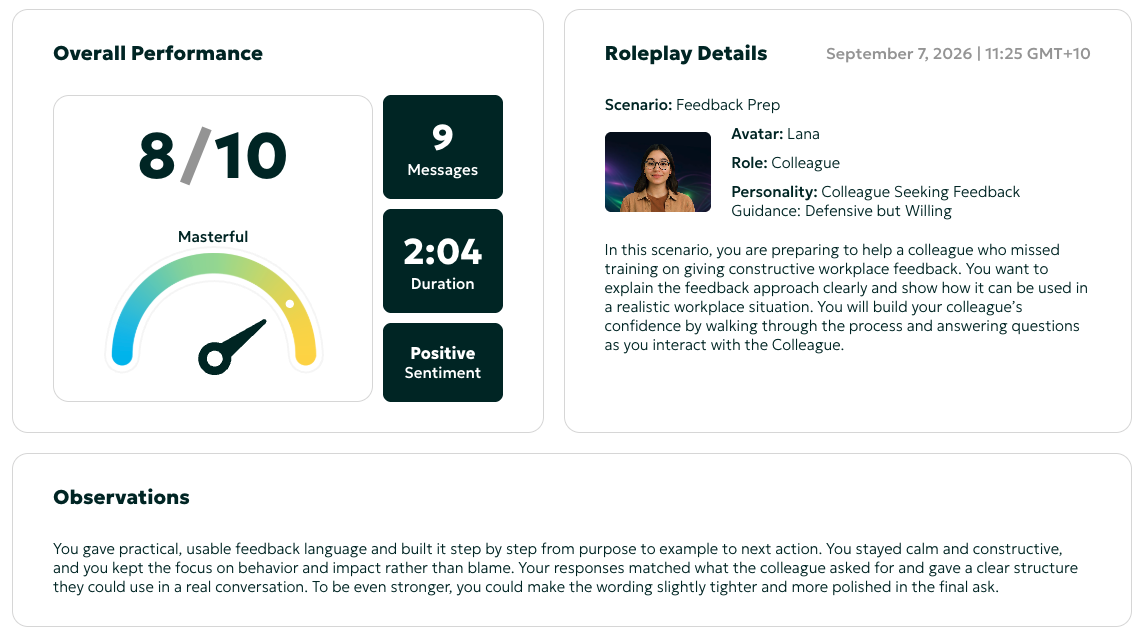
Managers role-play giving feedback to a team member. Teaching the "why" behind feedback makes them better leaders.
Support agents role-play explaining a fix to a confused customer. They learn the fix deeply.
Onboarding uses role-plays to let new hires teach a process back to a buddy. The buddy checks for gaps.
Compliance training comes alive when staff must role-play explaining a rule and why it matters.
The role-play gives people a real reason to teach. That reason turns a passive learner into an active one.
How to design it well
Role-plays only work if they are set up the right way. Here is how to get the most out of them.
Design for teaching moments. Do not just ask people to "practice." Give them a clear job: "Teach this concept to your partner in two minutes." The goal of teaching is what triggers the effect.
Give simple scaffolds. Not everyone is a natural teacher. Provide a simple structure they can follow. A one-page "teach-back outline" with the main idea, an example, and a check for understanding. This helps people focus on the content, not on what to say.
Build reusable artifacts. Make role-play kits your teams can use again and again. A scenario card, a checklist, and a short rubric become tools anyone can pick up. This is how you reach more people without starting from scratch each time. The same kit can train one team, then ten teams.
Measure real behavior change. This is the part most companies get wrong. They count how many people finished the training. Completions tell you almost nothing. Instead, watch what people do.
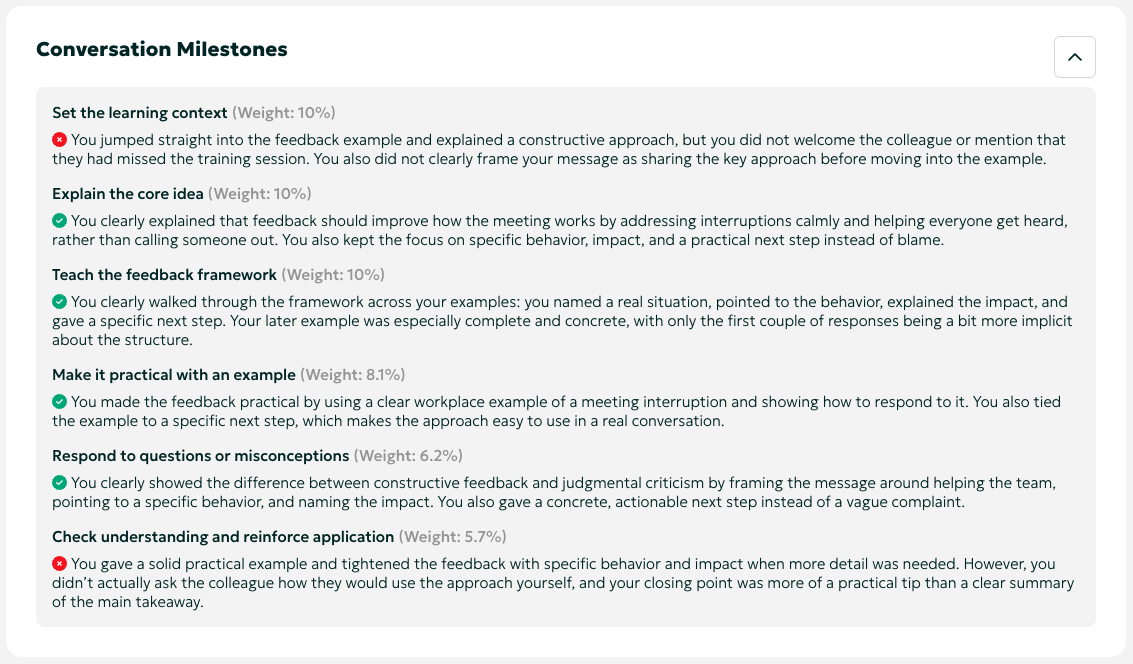
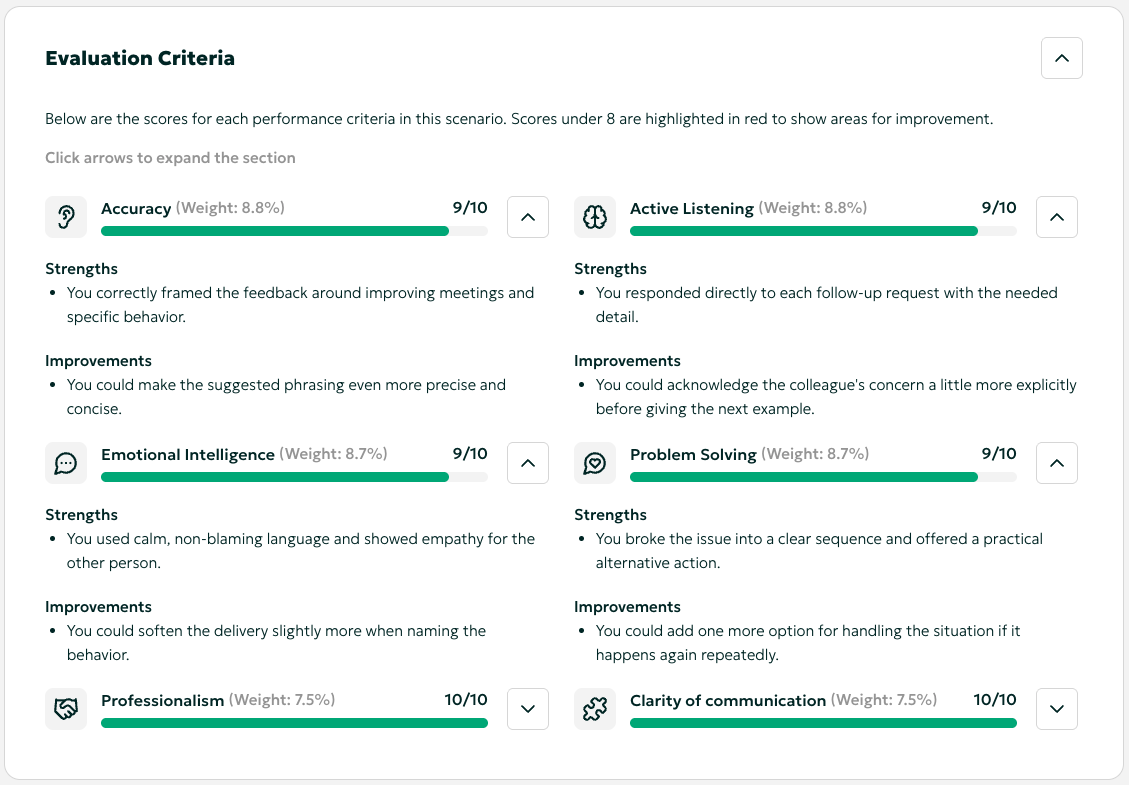
Ask: Did the teacher explain the key points clearly? Did they handle the hard questions? Did the "learner" understand? Use a simple rubric. Have managers observe role-plays and score them. Track confidence before and after. Look at whether people actually do the task better on the job.
The Protégé Effect is not about finishing a course. It is about changing how people perform.
The takeaway
When you design learning around teaching, everyone wins. Learners understand more. Teams share knowledge faster. And the company builds a habit of teaching that keeps growing.
Role-plays are one of the easiest ways to switch this on. They are cheap, they are flexible, and they put the Protégé Effect to work in real situations.
Now let's see it in action.